














































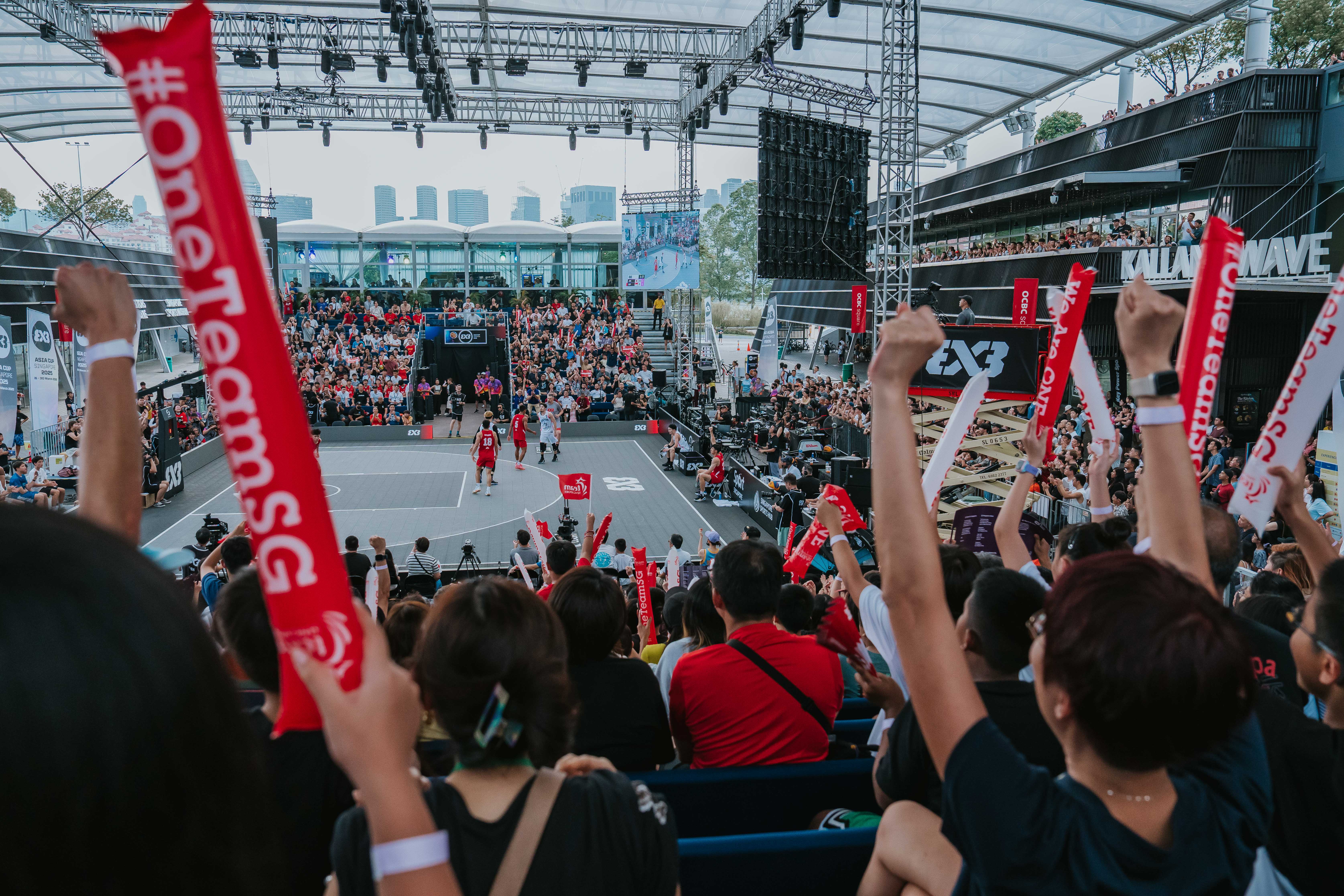
From what once seemed like an amateur pickup game confined to neighbourhood courts, three-on-three basketball has transformed into one of the fastest-growing disciplines in global sport, complete with professional tours, world championships and Olympic glory.
What began on half courts with improvised teams and unwritten rules is now a fully regulated format under the International Basketball Federation (FIBA), complete with a global ranking system, structured international circuit and a place on the Olympic programme.
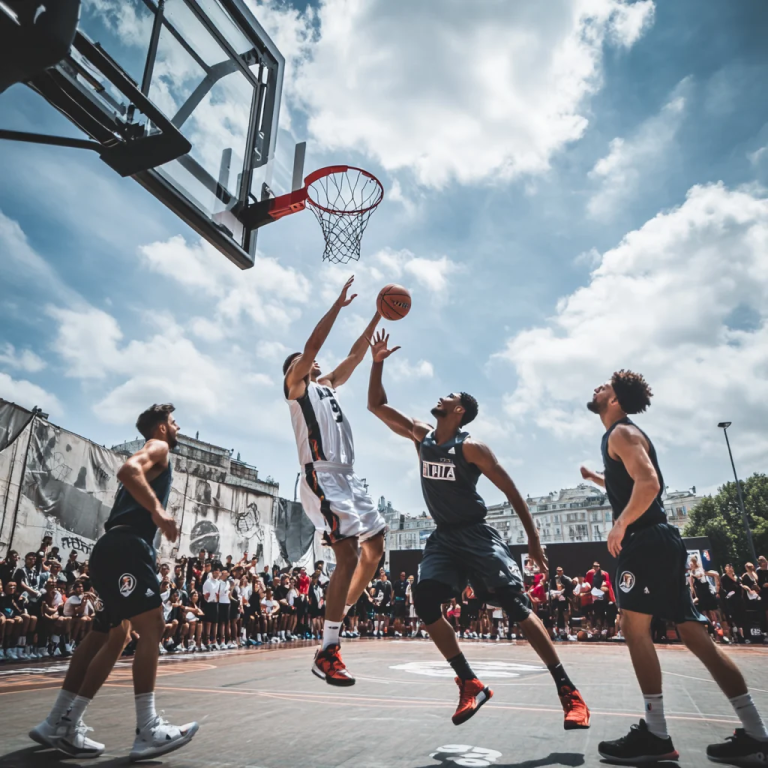
Photo Credit: Gym Aesthetics
From Streetball to Structured Competition
Organised 3x3 basketball evolved from the streetball culture that thrived in areas without access to full courts. In residential neighbourhoods, half-court three-on-three games became the norm. Teams were formed on the spot, referees were rare, if not nonexistent, and the action was fast and physical.
FIBA trialled the first organised 3x3 competition at the 2007 Asian Indoor Games in Macau, which paved the way to its first official international appearance at the 2010 Youth Olympic Games in Singapore.
The sport’s ascent was as rapid as the game itself. Just seven years after its Youth Olympic introduction, 3x3 basketball was officially added to the Olympic programme.
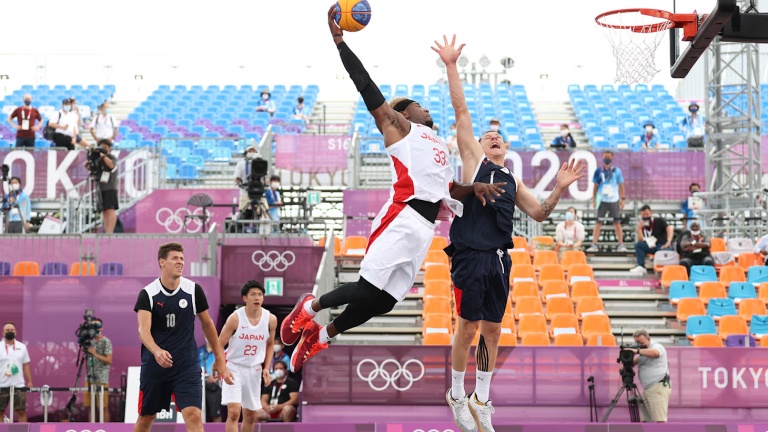
Photo Credit: Olympic Games, 2021 Getty Images
The Olympic Breakthrough
The Tokyo 2020 Games marked the Olympic debut of 3x3 basketball. The top eight men’s and women’s teams competed at the Aomi Urban Sports Park in front of a global television audience. Although spectators were not permitted due to pandemic restrictions, the event found its audience worldwide. The USA won the women’s tournament with the Russian Olympic Committee, and China completed the medal spots while Latvia won men’s gold, with silver going to the Russian Olympic Committee and Serbia clinching bronze.
Paris 2024 reinforced the sport’s growing momentum. Held at the iconic Place de la Concorde in central Paris, the tournament featured sold-out crowds of 4,000 spectators daily.
The Netherlands and Germany captured gold medals in Paris, adding new chapters to the sport’s Olympic history.
Looking ahead, 3x3 will return at the Los Angeles 2028 Games with an expanded field of 12 teams per gender, up from eight in previous editions.
Back home, the Singapore men’s team have made significant strides in the sport after claiming a historic SEA Games men’s silver medal last December and qualification for the upcoming Commonwealth Games.
How the Game Works
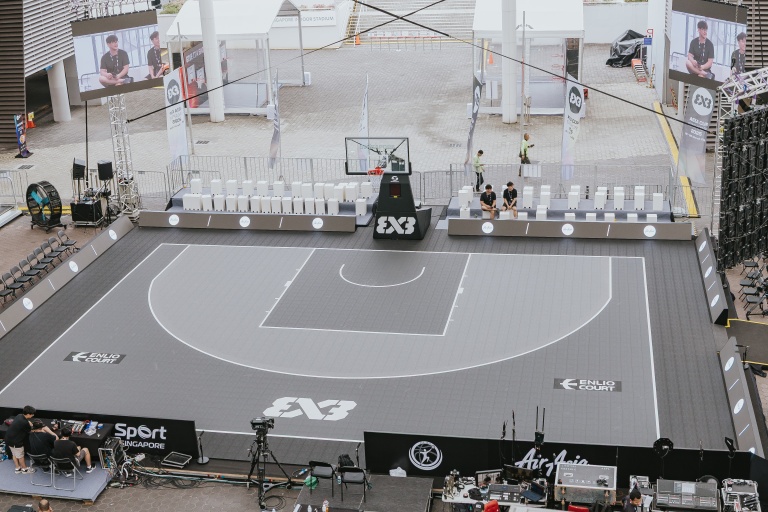
At its core, 3x3 is played by two teams of three players on a half-court using one basket. Each team has one substitute.
Games last 10 minutes or until one team reaches 21 points, whichever comes first. If the score is tied after regulation time, overtime is played, with the first team to score two points declared the winner.
The scoring system differs from traditional five-on-five basketball. Baskets made inside the arc count for one point, while shots beyond the arc are worth two.
Teams have just 12 seconds to attempt a shot, half the time permitted in traditional basketball. The shorter shot clock forces quick decisions and continuous attacking play.
After a made basket, the game continues immediately.
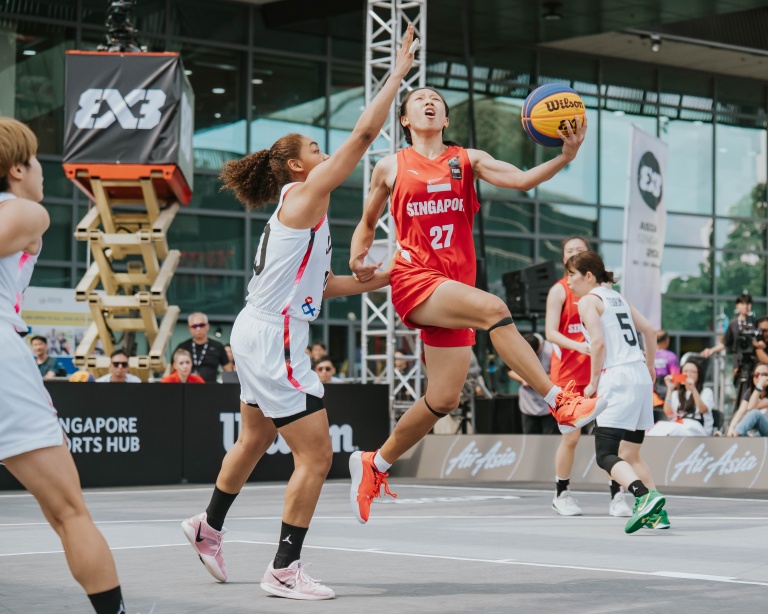
Just like street pickup games, when the defensive team gains possession, they must clear the ball beyond the arc. If an attacking team secures an offensive rebound, it can shoot again instantly without clearing. However, after a defensive rebound, steal or block, the ball must first be taken beyond the arc before a new possession begins.
Following stoppages such as fouls or the ball going out of bounds, play resumes with a “check ball” at the top of the arc, something that all streetball players are familiar with.
Basketball for All
Compared to the traditional five-on-five game, played on a full court with four quarters and 24-second possessions, 3x3 is more condensed and volatile.
With only three defenders to navigate, space is at a premium. Isolation plays, physical drives and long-range shooting offer different paths to success.
The shorter format and simple rules also make it highly accessible. Easy to watch and easy to understand, spectators can pick up the sport and follow the action easily. There is no shortage of action with constant scoring, quick momentum swings and little downtime between possessions.
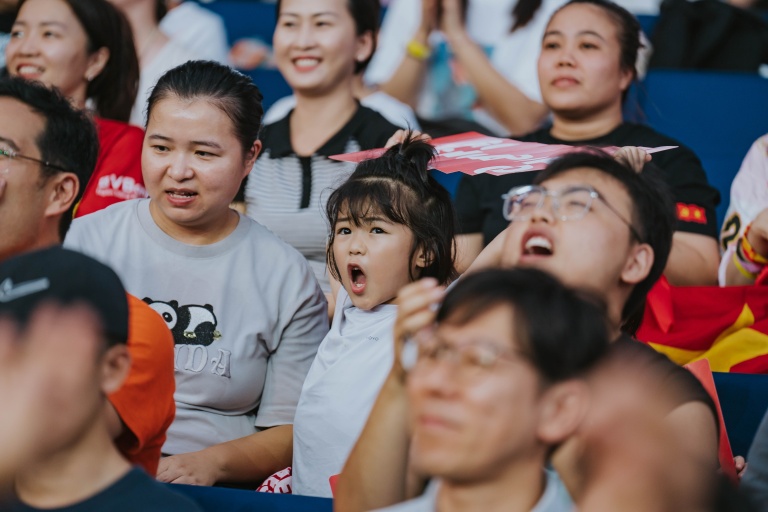
Perhaps most importantly, the sport’s roots in street basketball give it an authenticity that resonates beyond the usual basketball purists. 3x3 brings entertainment to anyone looking for high-energy competition in a compact package.
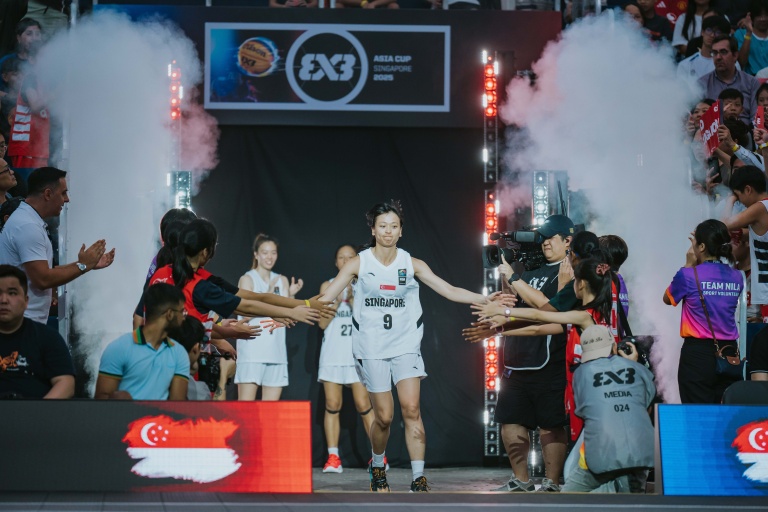
With the upcoming FIBA 3x3 Asia Cup, Singapore’s men’s and women’s teams, both seeded sixth, will face second-seeded Japan and another qualifier in the pool stage, with the top two progressing to the quarter-finals.
The men’s team begin their pool campaign on Apr 3 with the clash against Japan at 4.25 pm and one of Tonga, Republic of Korea or Vietnam at 8.55pm. The women will step onto the court a day later to face Japan and one of Chinese Taipei, Saudi Arabia, Bahrain or Hong Kong, China.
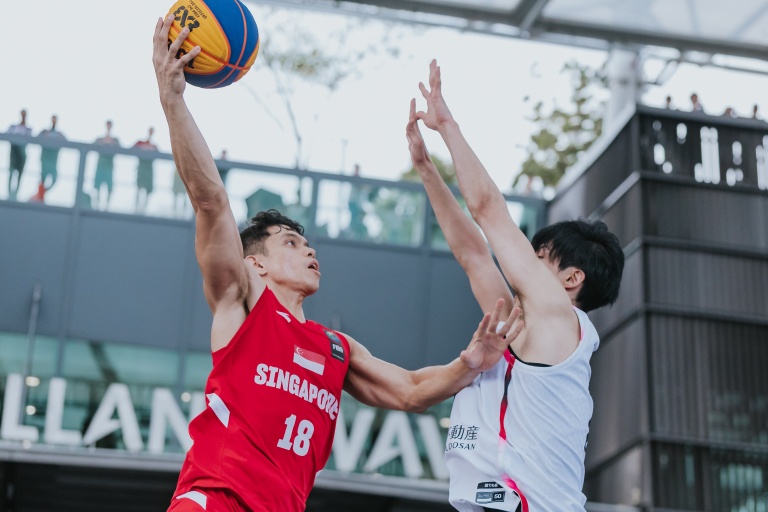
The men’s team will also be looking to build on their 2025 performance, where they booked a spot in the quarter-finals for the second time in tournament history
With the continent’s top teams set to battle it out in a fast-paced, high-energy format, the FIBA 3x3 Asia Cup 2026 promises non-stop action from the opening tip-off to the final buzzer.
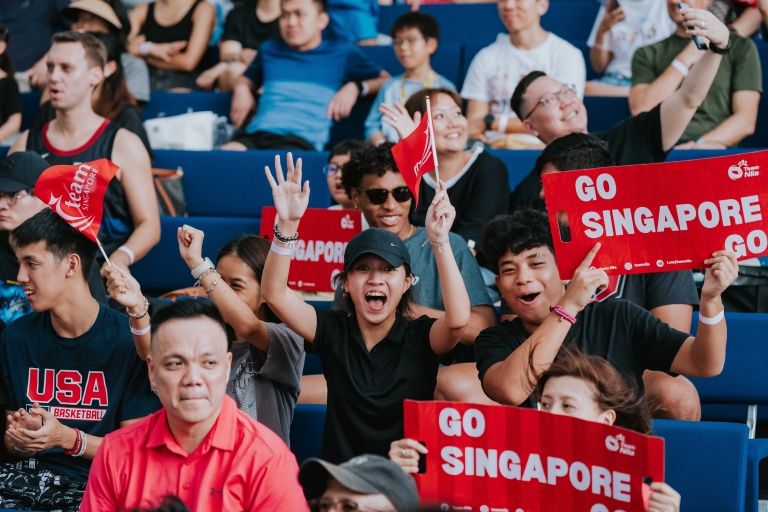
Whether you’re a long-time basketball supporter or simply looking for an electrifying sporting experience, this is your chance to witness the vastly popular 3x3 format up close.
Tickets are available here. Secure yours early and be part of the atmosphere as Asia’s best light up the half court.
The court may be smaller and the game shorter, but the thrill is anything but.


